30 Days Wild in the suburbs: Day 28

It’s really all about the frogs!

Having heard, I thought, a frog jumping into the water when I was tackling the pond, today I have hard evidence that they are back:

P1030866.JPG

And not just one, but two:

P1030867.JPG

They’re quite different, and one is much larger than the other.

Now I know this will sound ridiculous, but the presence or otherwise of frogs in my little plastic pond has always been a touchstone for me as to whether or not my garden was working as a wildlife friendly environment.  I have been sad not to have seen them for a while. And today is therefore a very good day.

30 Days Wild in the suburbs: Day 27

No photographs today. Most of the day spent travelling and in meetings, but then home to the garden.

Took more of the silt and leaves out of the bottom of the pond and tried to redefine the edge of the garden and the wild areas. And I think I heard the ‘plop’ of a small frog jumping back into the water. So, if I can improve the quality of the environment, and replant, I just might get them back again. In the meantime, the robins enjoyed the worms and small insects that were uncovered as I worked. Until the cat came out to sit by me, at which point the warning calls started ringing around the garden.

Tomorrow is another day, with more time to stand and stare.

30 Days Wild in the suburbs – and beyond: Day 26

A day unplugged from all electronic devices today.

So we set off for Windsor and Dogfest. A day of warmth and friendship with thousands of others and their dogs.

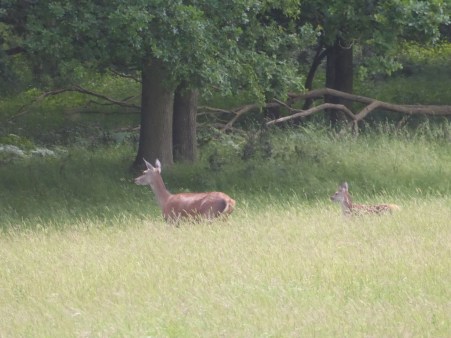
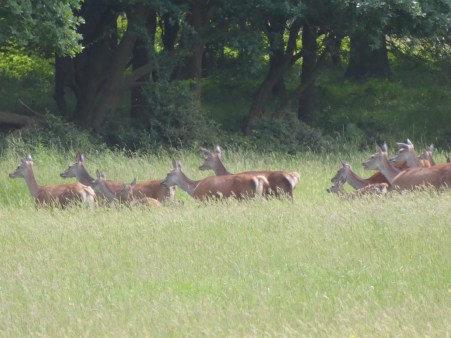
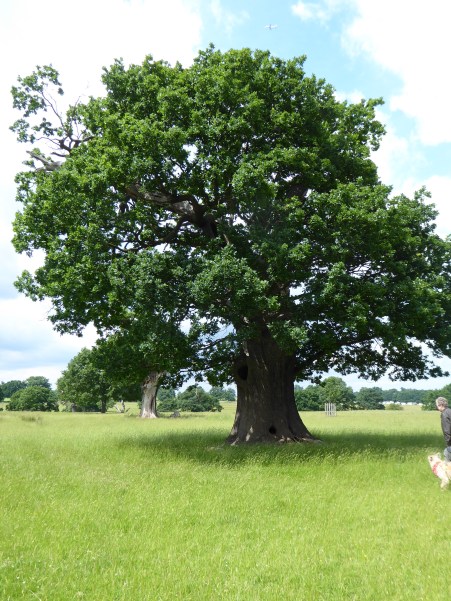
And a walk  along a grassy path, with other dogs, all on leads, through the Great Park, admiring the open spaces, the ancient trees and a herd of deer running across the path in front of us, calling to one another.

P1030840.JPG

P1030841.JPGP1030845.JPG


30 Days Wild in the suburbs: Day 24

Just a brief moment of wildness: and, yet again, courtesy of the gardening volunteers at our local station.

More than one journey, so more than one platform, and both ponds!

The shots in the top row are from the, netting protected, pond on the ‘down’ platform and the other two from the usual ‘up’ platform.

I’m used to commuting and commuter trains, but this month has made me even more appreciative of the work that goes into making our local station a real wildlife hot spot.


30 Days Wild in the suburbs: Day 23

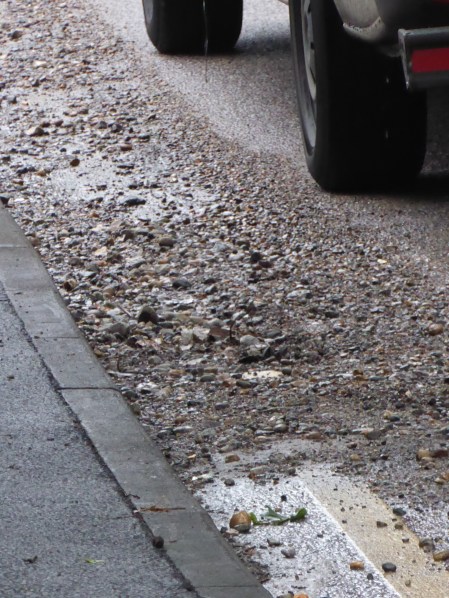
Last night it rained and rained and rained – along with thunder and lightning. The impact of the volume of water on the physical environment has been significant: locally, we have debris in the roads and parts of the road surface itself damaged:

P1030820

P1030821

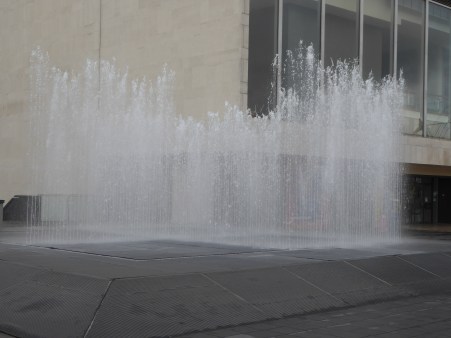
So I decided to reflect on water today: managed and playful on the South Bank

P1030804.JPG

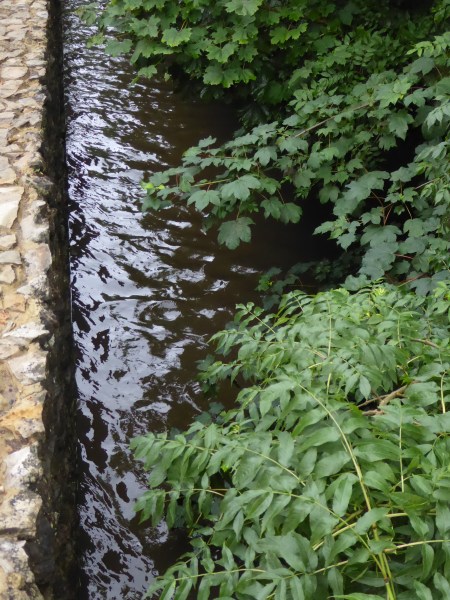
and racing along channels that are normally much quieter, and where I first spotted the little egret and the ducklings, at home (compare with Day 3 and Day 9, part 2):

P1030825.JPG

And reflecting images with often astonishing clarity – these are, again, from the South Bank:

We are used to water in the suburbs – and complain during hotter periods when our gardens wilt for lack of it -but over the past few weeks it has been easy only to grumble about the inconvenience it can cause. Today I enjoyed looking for the upsides of unexpected images and reflections.

30 Days Wild in the suburbs – and beyond: Day 22

Not a very wild day today, but it started well, watching the Mullein Moth caterpillar munching its way through the leaves of my brother’s plants:

P1030801.JPG

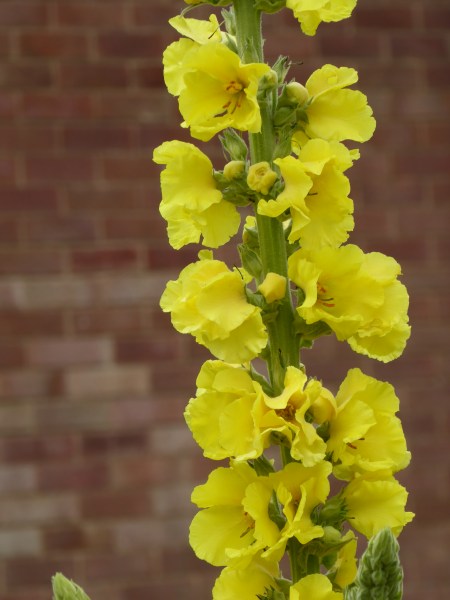
The flowers are nevertheless really lovely:

P1030803

In the afternoon I saw grass and deckchairs on the roof of the Ashmolean (and spotted a tree growing somewhere it shouldn’t in a neighbouring building!), explored the green heart of Wellington Square and enjoyed a gathering in a typical Oxford College quadrangle.

But the latter part of the evening was all about the weather. As we drove back to London we saw lightning over the city and the rain began in earnest.

So tomorrow’s blog is going to be all about water!

30 Days Wild in the suburbs – and beyond: Day 21

Today’s post comes thanks to my brother. We’re staying with him in Cheltenham, and having spent the afternoon in the town, I was looking for a more wild space, so we walked back through the Pilley Bridge nature reserve, entering via the Community Orchard:

P1030774.JPG

Sadly, the lovingly built wildlife home had been burnt out – destroying at least half  a mature tree in the process. But things improved as we moved through the site.

We weren’t sure what had been working on the entrance to this nest box, but found another which had been similarly enlarged a little farther along the path. Any ideas?

P1030777.JPG

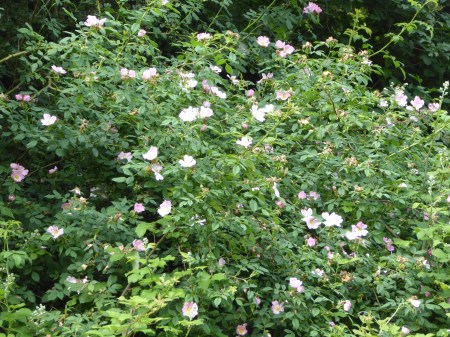
There were elder, bramble and wild rose flowers aplenty and a variety of lower-growing flora:
P1030794.JPG

P1030793.JPG

There were various fungi (or possibly moulds):

P1030784.JPG

P1030785.JPG

In the water there were little fish (failed again on those), and bright, darting flies (poor picture, but amazed to have got a picture at all). There were more flies swarming over the water, and enough midges to make me feel decidedly itchy.
P1030786.JPG

And finally there was this – which might, or might not, have been a stickleback nest:

P1030789

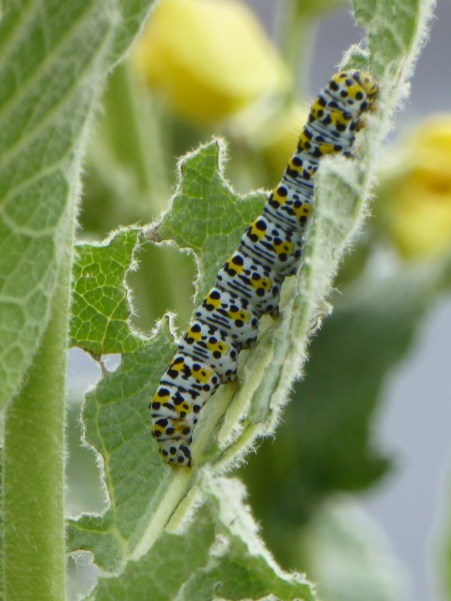
And if all that were not enough, we got home to this: not good news for the flowers, but pretty spectacular – the caterpillar of the mullein moth:
P1030795

All in all, pretty wild!

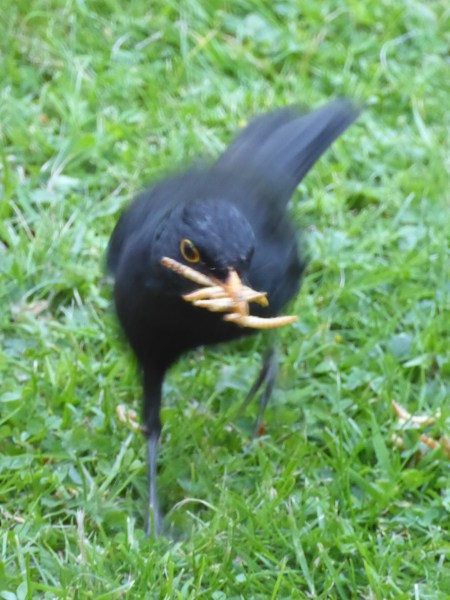
PS: And just how many mealworms can one blackbird carry at once?
P1030800.JPG

(He wouldn’t leave some and come back a second time, because he had to chase off another young male whilst he was feeding).

 

30 Days Wild in the suburbs: Day 20

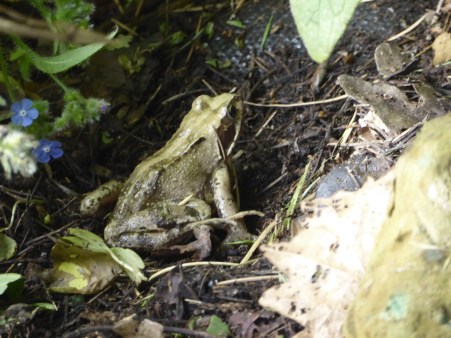
Torrential rain this morning, when I was at home. Beautiful sunny afternoon, when I was in meetings. My hands on ‘wildness’ has been limited to persuading a reluctant dog that it is better to get soaking wet for 20 minutes than to stay inside (as I thought) all day. So the best I could do was plan how to rehabilitate my pond. In previous years it has been home to three healthy looking frogs, although I’ve never seen any spawn or tadpoles. This year I haven’t seen any signs of amphibians at all. I suspect there is too much silt and general nastiness in the bottom of the pond for it to be as attractive a habitat as it has been in the past. So it’s time to cut back some of the overgrowth and let the whole thing breathe more easily. This could be messy!

There is actually a small pond under here, but it is suffering. The iris has escaped from its container, with the  earth settling at the bottom. Leaves from the sycamores on the embankment have fallen into the water and , again, eventually settled into the silt.

P1030461

The honeysuckle is a bully and is taking over much of this side of the garden and the blue-flowered alkanet (I think) has wicked soft prickles on its stems which get under the skin, despite being almost too fine to see, which always adds a little excitement to gardening. Watch this space for progress later in the week (for the next two days we will be ‘beyond’ the suburbs).


30 Days Wild in the suburbs: Day 19

Well, it’s all happening in the suburbs on Day 19. For one thing the sun is shining. This is clearly a mistake and normal service will soon be resumed, but for now it is having a very positive effect on the insect life.

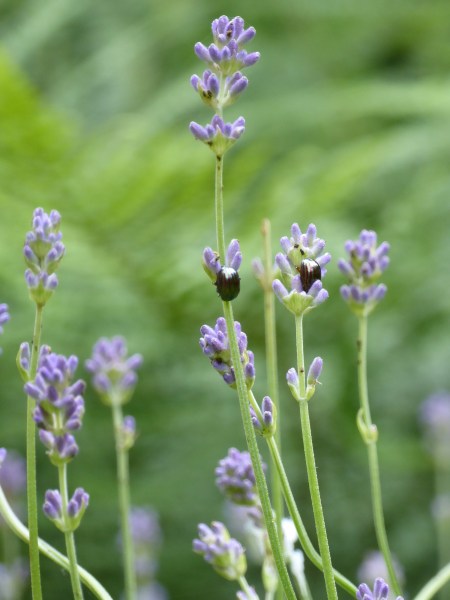
There are beetles on the lavender, bees in the roses, and hover flies everywhere:

P1030768

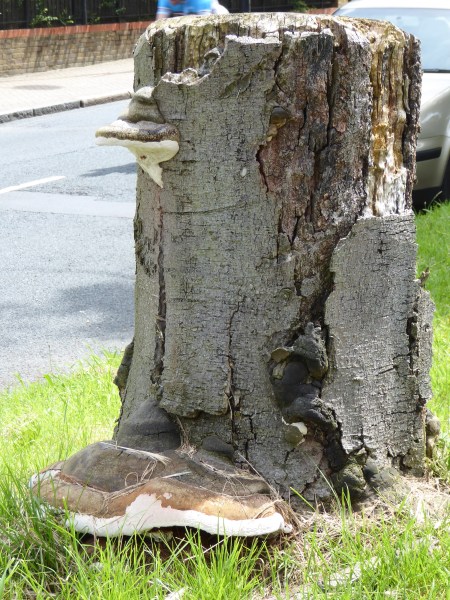
We also passed an absolutely enormous fungus on the way to the farmer’s market (where was everyone today, it’s normally much busier):

P1030765.JPG

Less happily, when my husband went out with the dog, he found a baby pigeon sitting on the bonnet of the car. Thinking it unlikely that the bird was just hoping for a lift, he called for help. I lifted it on to a nearby tree – with very little resistance on the pigeon’s part – and left it to recover, hoping for the best and fearing the worst.

P1030767

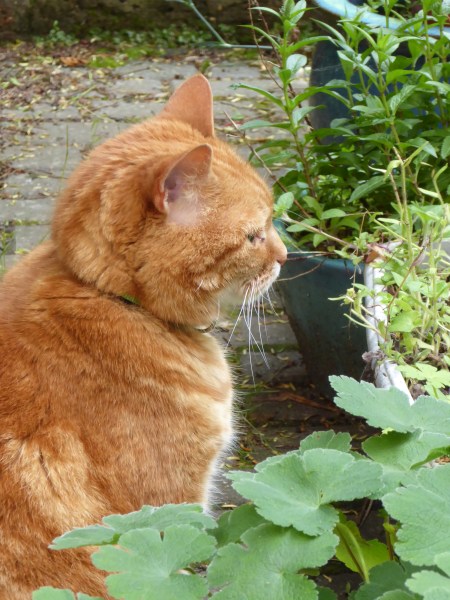
I tried to give it a fighting chance by keeping an eye on the cat, who was clearly already keeping an eye on something else:

P1030769.JPG

But I’m afraid it didn’t make it ( and this time it had nothing to do with the cat).