The Garden-that-was-not cared-for: a new hedge

At the back of the garden is a railway embankment. The boundary is marked by a rusty metal fence which is not a thing of beauty. There is a small slip of ground at the base of the fence, then a concrete path, and then a very dry border. The tall trees on the embankment are wonderful – and one of the things that drew us to the house – but make it a challenge to grow anything of great interest in this space.

I decided to try a native hedge along the fence line. Roughly 50 feet long and around 15 inches wide, the strip is challenging to plant. But, on the plus side, there is a rich depth of leaf mould.

A combination of squirrel activity and seeds dropped from the embankment means that we always have a good number of seedlings in the garden, so the new hedge will have several small home grown ash trees, an oak and a yew, as well as the bare root beech, hazel, hornbeam, rosa rugosa and blackthorn which were ordered very late in the day and arrived just in time to have a chance to grow.

Almost all the new plants have taken and are leafing up well. The exceptions are the two blackthorns – but I’m not giving up on them yet and hope that there is still time for them to thrive. If they don’t, they’ll be replaced in the autumn.

This is an area where the green alkanet will be allowed to grow, as will bramble and the ivy which has taken hold at one end of the fence.

The aim is to develop a dense hedge of native trees which will be kept trimmed to a reasonable height both to block out the ugly fence and to provide a place for small birds and mammals to nest.
The Garden-that-was-not-cared-for – is back!

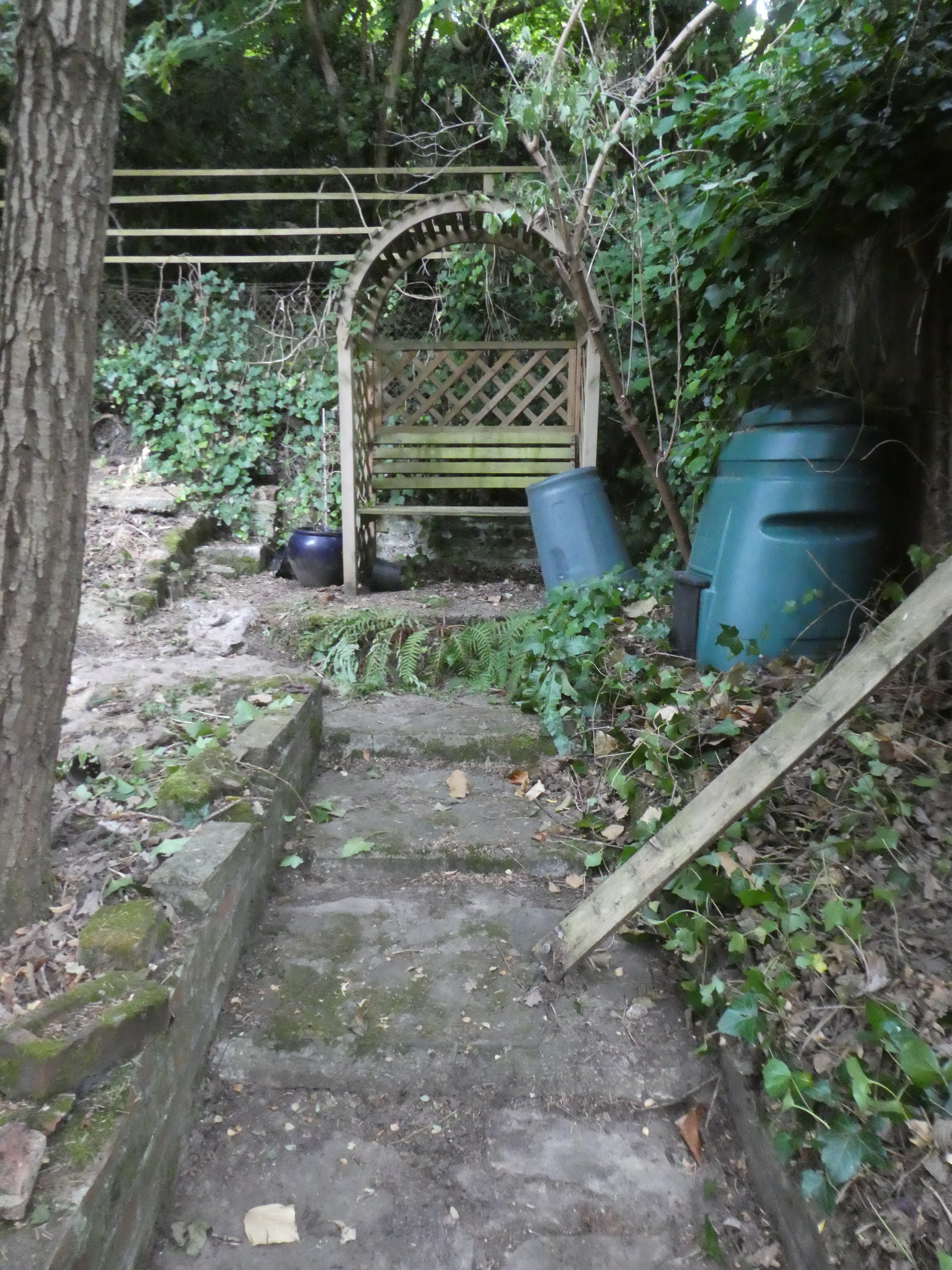
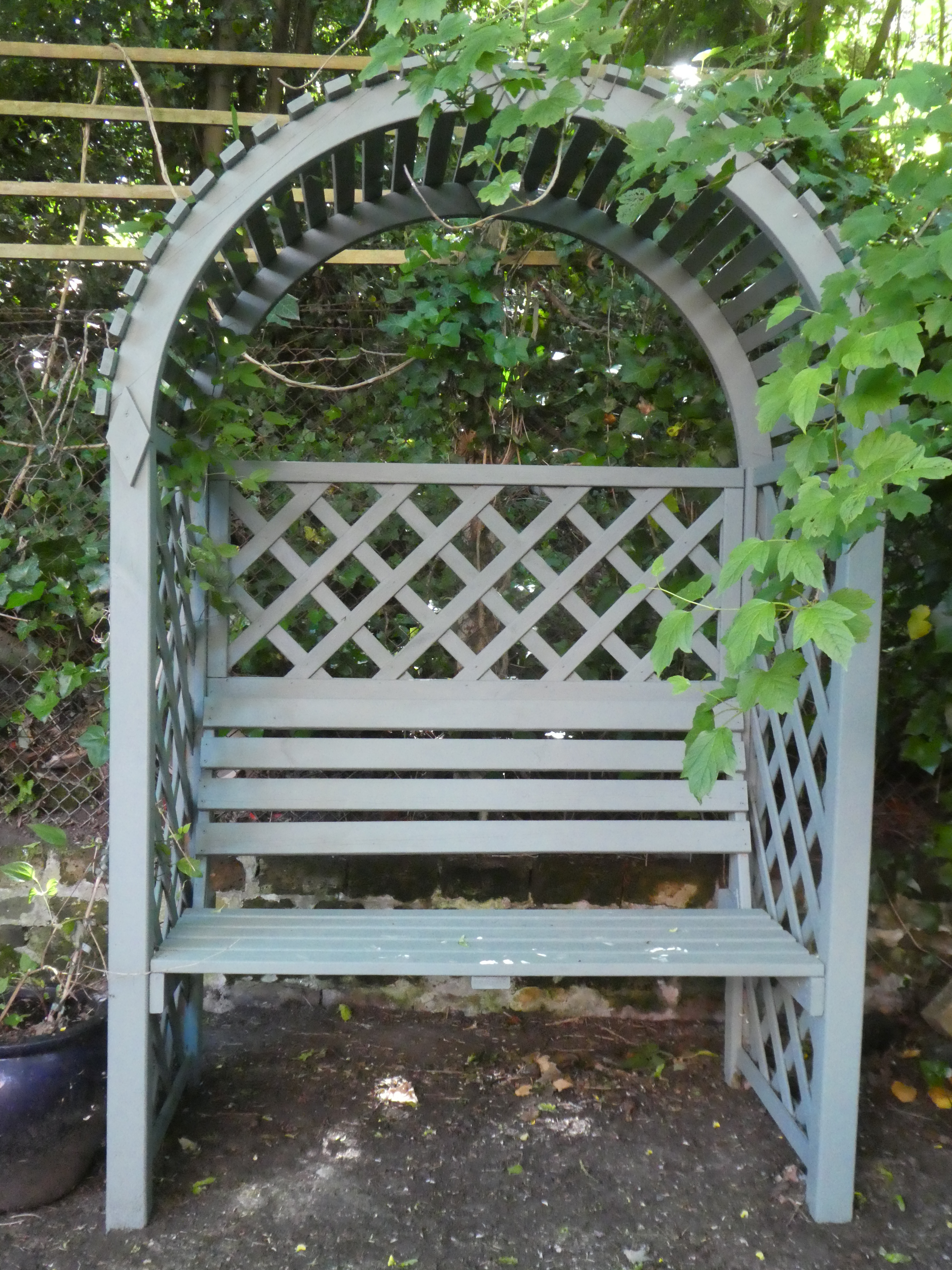
1st June 2023 : time for an update. We’ve been back in London for 8 months now. I’ve been unexpectedly busy for all that time, but have nevertheless been able to make a good start on the recovery of the garden. David has been helping with resurrecting non-flowering garden elements, such as this seat, tucked away in a shady corner.

We lost a lot of plants as a result of a strange, unpredictable winter that seemed to go on for ever: a rhododendron that was a gift from much-loved family members and all the yuccas. Then we jumped straight into full-blown spring and now seem to have moved overnight to summer. The last few weeks have been extremely dry and so many things flowered at once that it’s difficult to know what will be left for later in the year.

There are many more plants in pots than usual: some here already, some brought back from Oxford and others the result of starting to use the garden vouchers given as a leaving gift from my last role. Watering is now a daily meditation.

A border is being reworked, and I have planted a hedge at the back of the garden to grow up in front of the metal fence which separates the garden from the embankment behind. There are the beginnings of a fruit and vegetable patch, and fruit trees in pots. For the first time I have taken a deep breath and dug out large, healthy plants which did not add to the joy of the garden and which were smothering things I wanted to have.

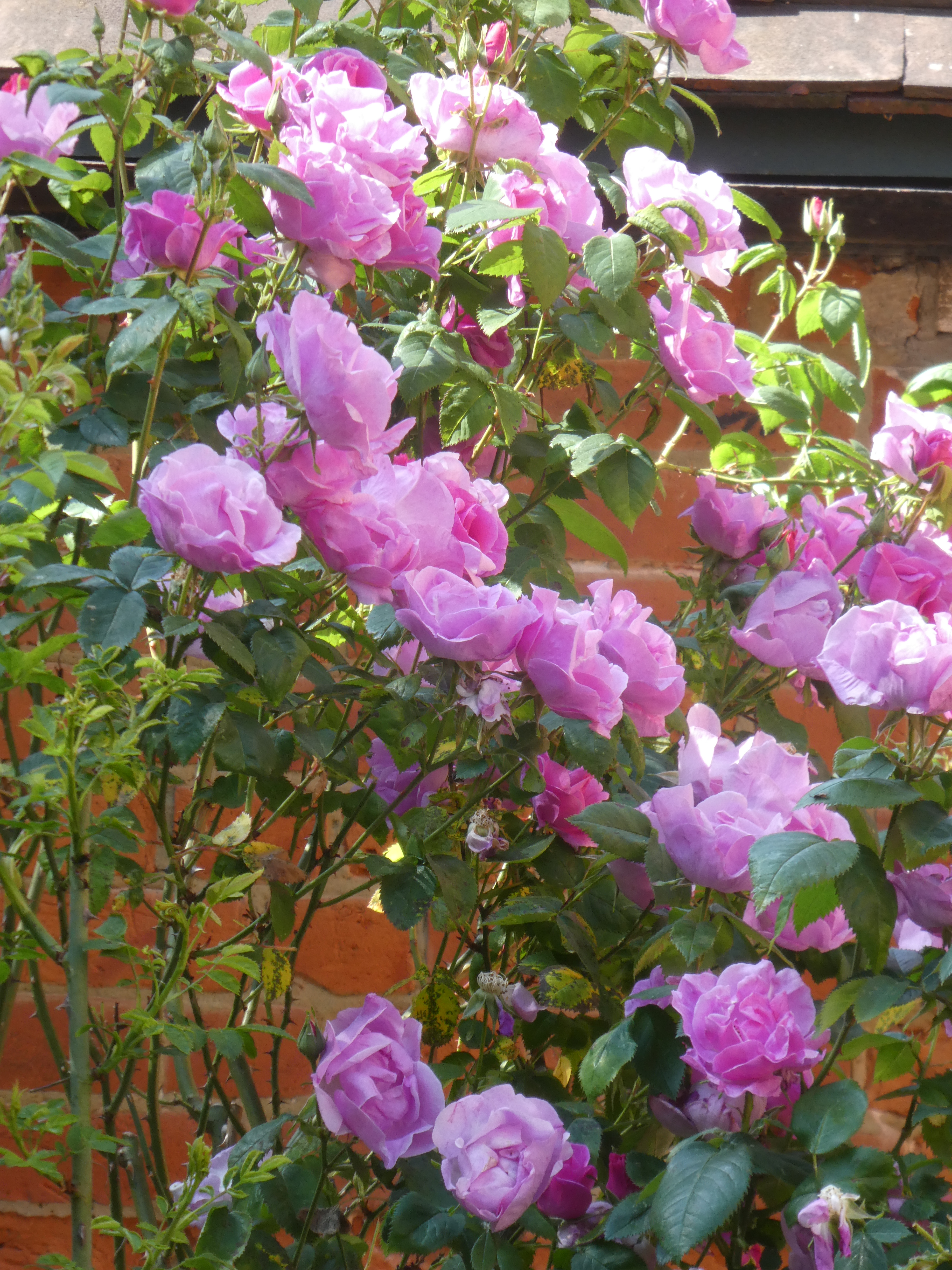
The benefits of the hard pruning of the old roses last year are coming through – although the huge rose on the patio is just throwing out soft foliage and not yet setting flower buds.

Tree surgery is booked for after the nesting season to give a little more light and space.

And we are enjoying eating at the table on the patio, watching blue tits and long-tailed tits, robins and blackbirds getting more and more confident in our presence. The squirrels have long since given up being anxious about us, and are eating the peanuts almost as fast as I can fill the feeder.

This month I am going to use a revived blog to look at a section of the garden each day, focussing on wildlife elements for #30DaysWild.

Tomorrow: the new hedge.

The Garden-that-was-not-cared-for: round 2

We gave the garden a week to recover from the recent big interventions. During that time there was also a major downpour, which helped.

The apricot rose has responded well to its liberation from ivy and bindweed and has an encouraging number of flowers and buds. The pittosporum has survived and its leaves almost sparkled in the sunlight, against the shadows of the yucca.

This weekend’s task was to make a serious attempt at clearing one of the borders back to the fence, to discover if anything survives in it that’s more interesting than the smothering honeysuckle.

I was also hoping to plant a few new things in areas which have been cleared and start getting mulch down. That was definitely over-optimistic. The ground is compacted by drought and ancient roots and it will take a lot of rain and some serious digging before I can even begin to think about new planting.

I also really wanted to get the pond clear so that next time it rains it can start the process of refilling with clean water. Good progress here, but even a small pond can accumulate amazing quantities of foul-smelling rubbish and it will take a couple more goes to get it really clear. I’m piling the rotting vegetation that comes out by the side of the pond so that water can run back in and anything that might have managed to survive in the bottom can creep back into the remaining liquid.

Those were the aims. I made a lot of progress in clearing back one of the borders. But completely underestimated the time taken to bag up the material that I had cut down. 2 hours working back towards the fence and then 4 hours chopping it into pieces that would fit into rubbish bags.

Why so much slower than the last big push? Firstly – no brother. He’s taller and stronger than me and a huge help: not least by setting a fearsome pace and not getting depressed by the scale of the mess. Secondly – no skip. Last time it was possible to drag whole branches through to the skip and not worry about cutting them down. And thirdly – no soft target. Last time, after an hour of reducing a hedge or removing brambles, I’d spend a while on the apricot rose and could almost see it responding in real time. Bagging things up takes for ever for no obvious impact on the garden itself.

However: a ridiculously fat and bossy robin spent much of the time bouncing around my feet, demanding that I turn over another heap of twigs and leaves so that it could find food; I discovered a good pyracantha hiding at the back of the border and freed it from the honeysuckle, and it is now possible to walk straight up the steps from the patio without dodging brambles, holly and the sharp edges of dead branches.

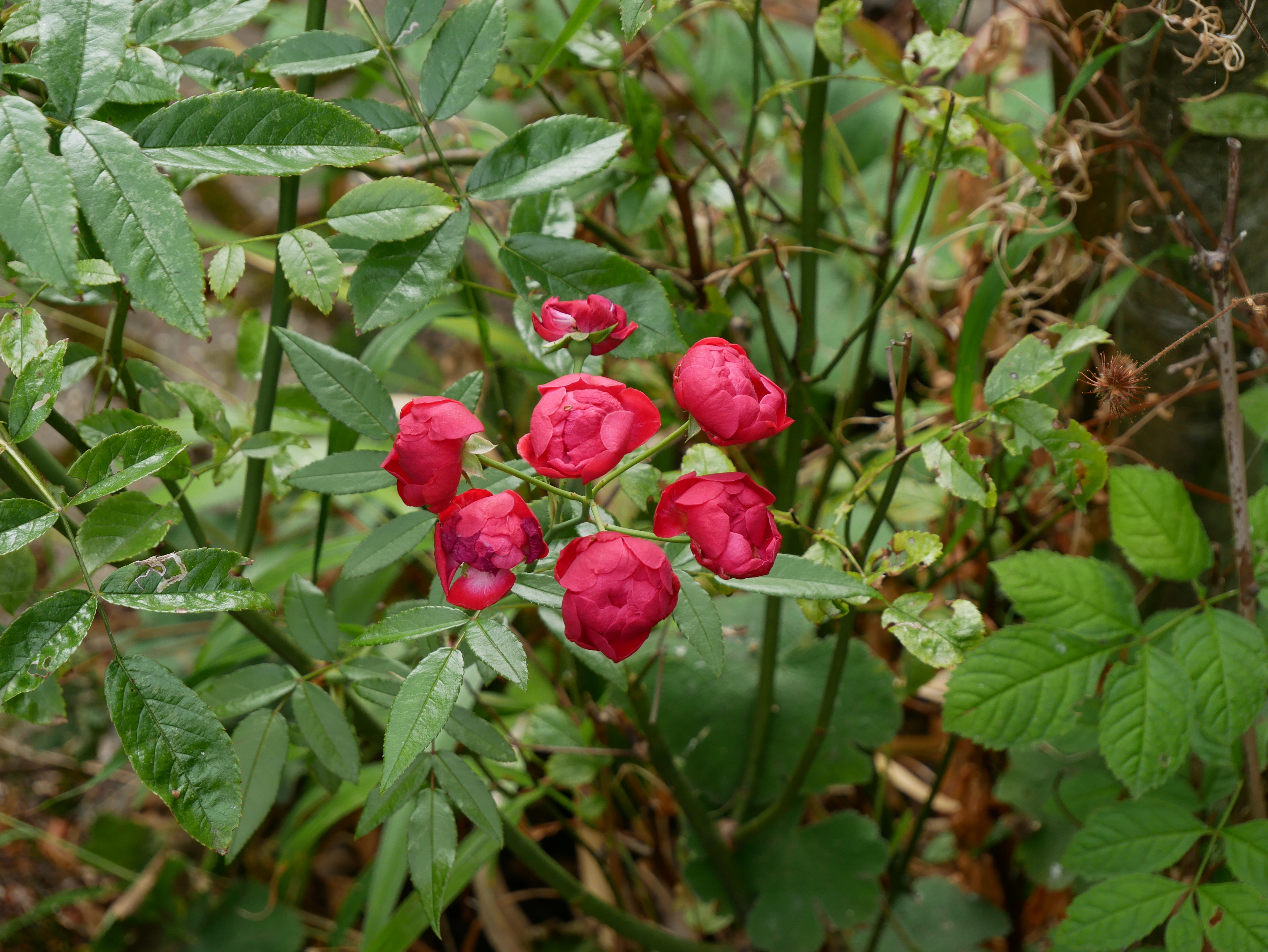
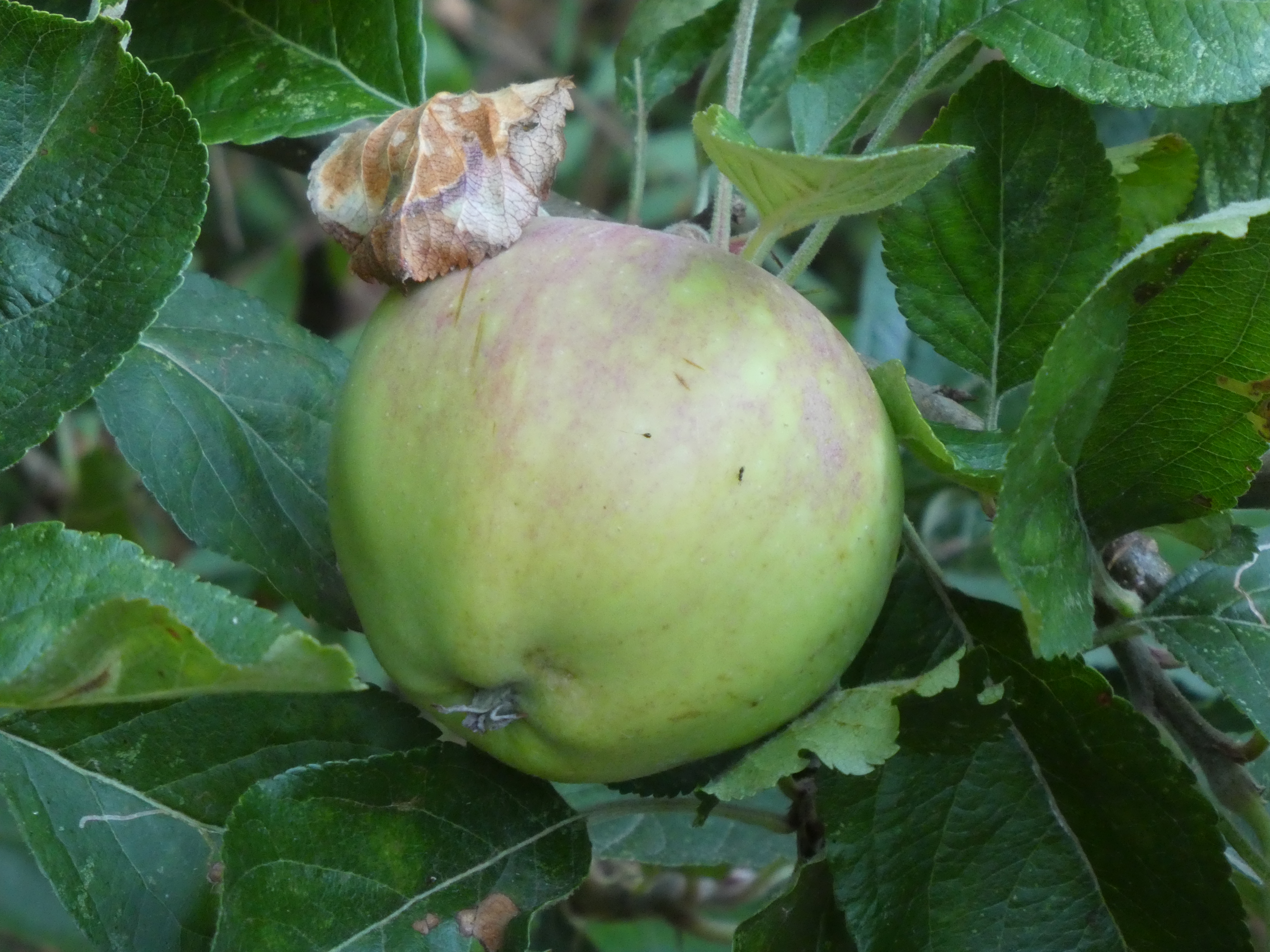
And there are little splashes of colour around the garden if I look hard enough: a small red rose, the berries of the mountain ash and a few fat apples:

And in the house, a reminder that occasionally a plant has a moment of perfection:

The Garden-that-was-not-cared-for: progress

The last few days have been about ground-clearing.

Thanks to my brother, and his range of useful garden kit, a start has been made on the front laurel hedge, the buddleia and other established plants which had taken over the front garden.

A corner behind the garden store has been completely liberated from ivy and brambles.

The steps down to the back of the garage have been cleared and we have started to tackle the overgrowing canopy.

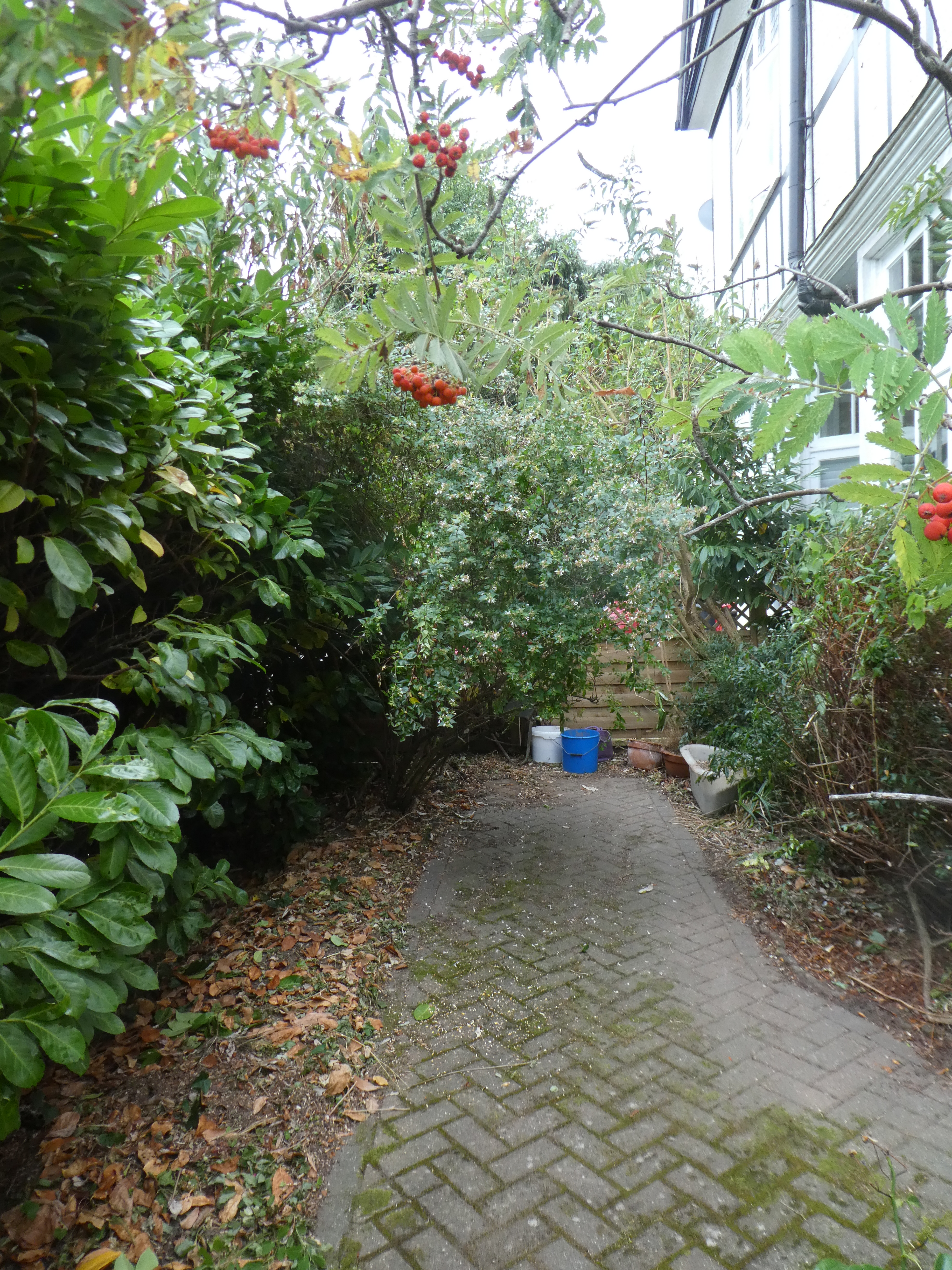
And the path which runs along the back of the garden is now passable.

We are uncovering more and more that needs to be done. It will be a long while before we get to the point of being able to replant and enjoy the garden, but this is real progress.

By the end of the week I hope it will be possible to change the title of this blog to something that reflects a more hopeful future for the garden-that-was-not-cared-for.

The Garden-that-was-not-cared-for

Tomorrow is a big day for the garden. My brother has arrived with his hedge-trimmer and array of tools and a skip will be delivered in the morning to take the debris. The huge laurel hedge at the front of the house will be cut back to a more manageable size, the rampant buddleia tamed, and the bushes overhanging the driveway cut back. Then the trees growing against the garage will be trimmed and the ivy removed from the garage roof.

If the weather forecast is correct, we will be working through the rain, which is slightly ironic after weeks of drought, but will make the physical effort more manageable. It all feels more like building work than gardening at the moment, but once this stage is over we will have a clear run at the plants themselves and more space to organise for the future.

The idea of creating a wood is back at the forefront of my mind after a weekend visiting a friend who planted an acre of native trees – including fruit and nut trees – 6 years ago. The drought has led to a number of distressing losses, but it is already clearly developing, with a good range of insect life and more butterflies than surrounding areas. We also visited a larger area of woodland, planted 16 years ago, which recently hosted a wedding celebration. So, whilst the garden must come first, I am going to keep thinking about and planning for that woodland dream.

The Garden-that-was-not cared for: frogs

The small pond, installed many years ago, once home to several large frogs and downfall of an unwary neighbour, when rescuing ducklings from the fox – another story for a different time – is almost completely empty. Only a foul-smelling sludge remains and there is no sign of life. I loved this little pond, and would watch and photograph the frogs day after day.

Another day I will clean it out and refill it, add oxygenating plants and hope for the return of life. Today its decay seems to sum up the state of the garden as a whole.

But then…..yesterday we had lunch in the garden with a friend. Although many of the plants were drought-impacted, shrivelled and crisped, and we had to pause conversation when a train ground by, nevertheless, passing bowls of food between us and sharing hopes and memories reminded me of why the garden is so important to us.

Today we two risked the mosquitoes and had supper outside as it got dark. Good food, and the world quietly slowing down around us.

And later, as I watered pots containing the plants that have survived the heat and neglect, a sudden movement amongst the damp ivy. A small frog, which had found refuge in the spaces between, surprised by the sudden downpour into revealing itself. Who would have thought that a single frog could generate such a rush of emotion.

The Garden-that-was-not-loved: ivy

It seems that I did not initially mention ivy as an issue . This was probably out of cowardice. Ivy is taking over the world and it’s starting in the garden.

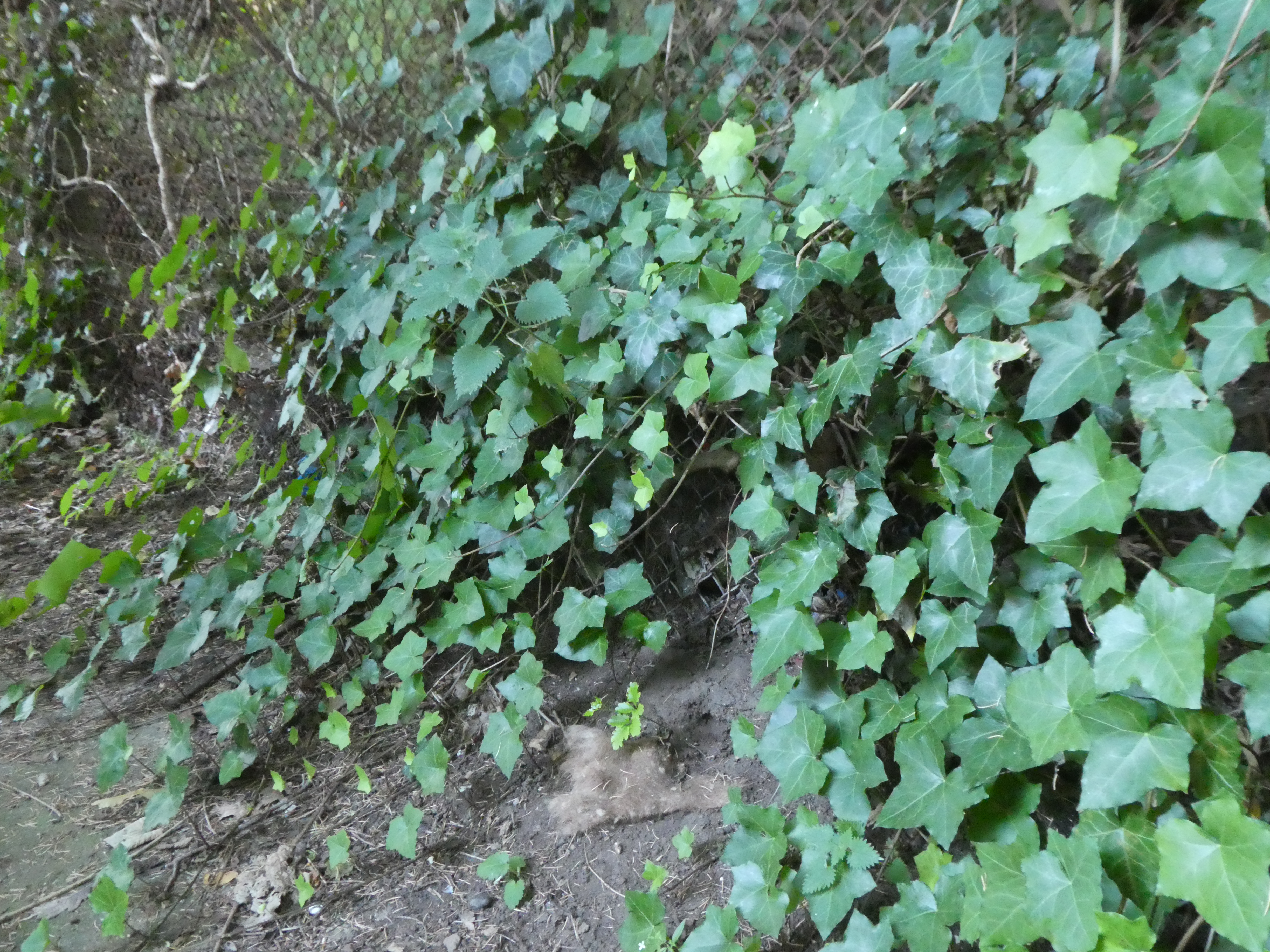
It thinks I haven’t noticed – but I have. It is creeping down from the embankment, through the chain-link fence.

If I’m working in the garden, the ivy is canny. It doesn’t grow visibly in front of me. But if I turn my back on it, I can feel it inching up behind me. One day I will turn around quickly and catch it moving.

It has even learnt where the compost bins are, so that it can draw on their goodness before setting off again.

If you don’t hear from me for a while – look under the ivy…….

Or, just possibly, it has been a long, hot day and I need a sense of perspective.

The Garden-that-was-not-loved: Trees

The Garden-that-was-not-loved has an issue with trees. Well, actually, I have an issue with trees.

I have always wanted to plant my own wood. I haven’t managed it yet and realistically I am never likely to. But in my dreams I am gradually accumulating the young trees which will, one day, be transplanted to that wonderful new wood, to grow tall and strong, develop their own ecosystem and be beloved by my grandchildren.

At the back of the garden we have small oak trees – English and holm – and an ash. No, I did not plant them. Squirrels are one reason they are there. Another is that I cannot bear to dig up perfectly healthy young trees. Trees that appear unexpectedly in borders are allowed to stay.

This is a terrible weakness. On the other hand, I have this beautifully shaped little yew, just waiting for its wood.

Trees which appear mysteriously in plant plots are also allowed to stay. Here, for example, are three young oaks and a holly.

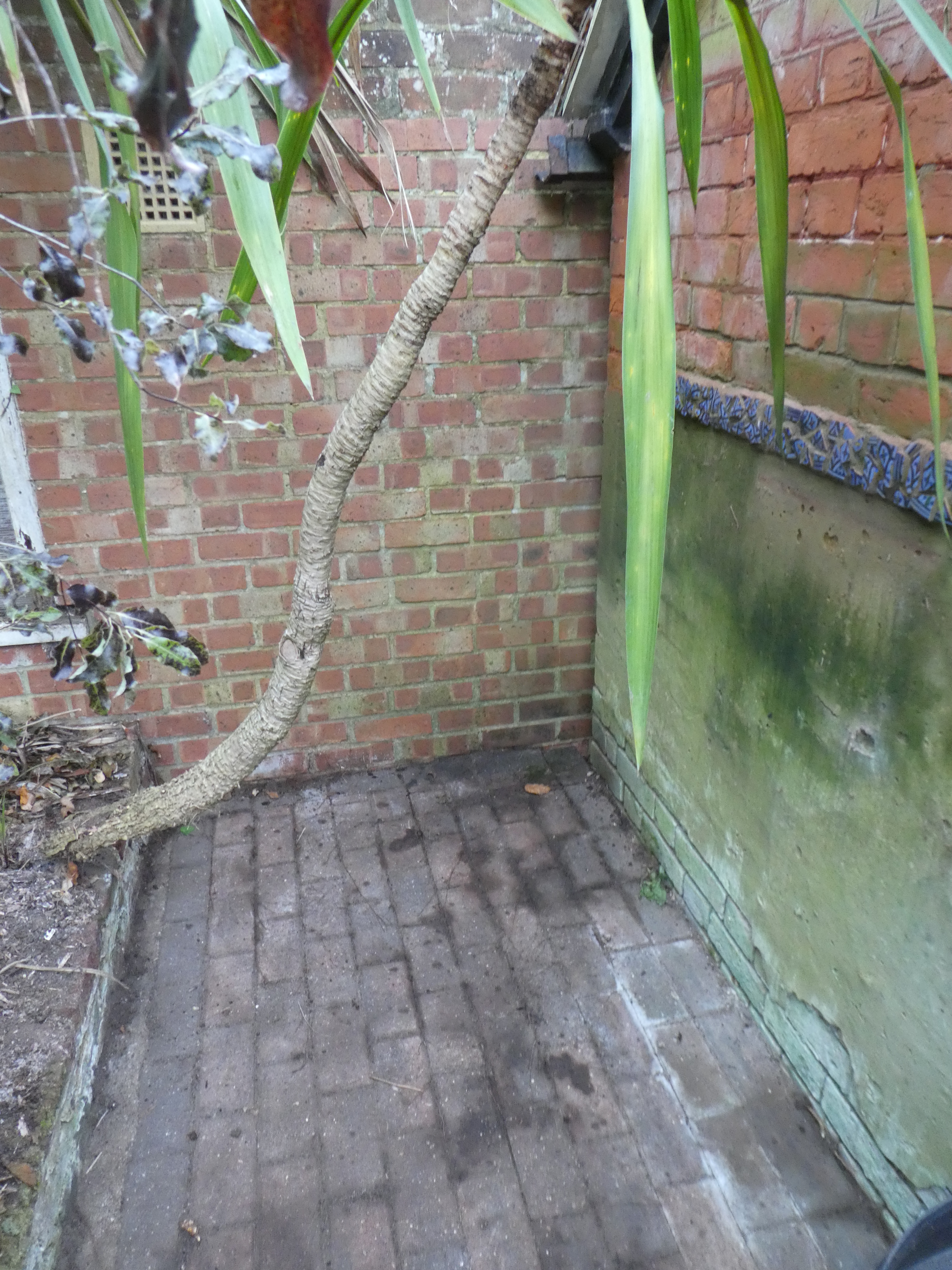
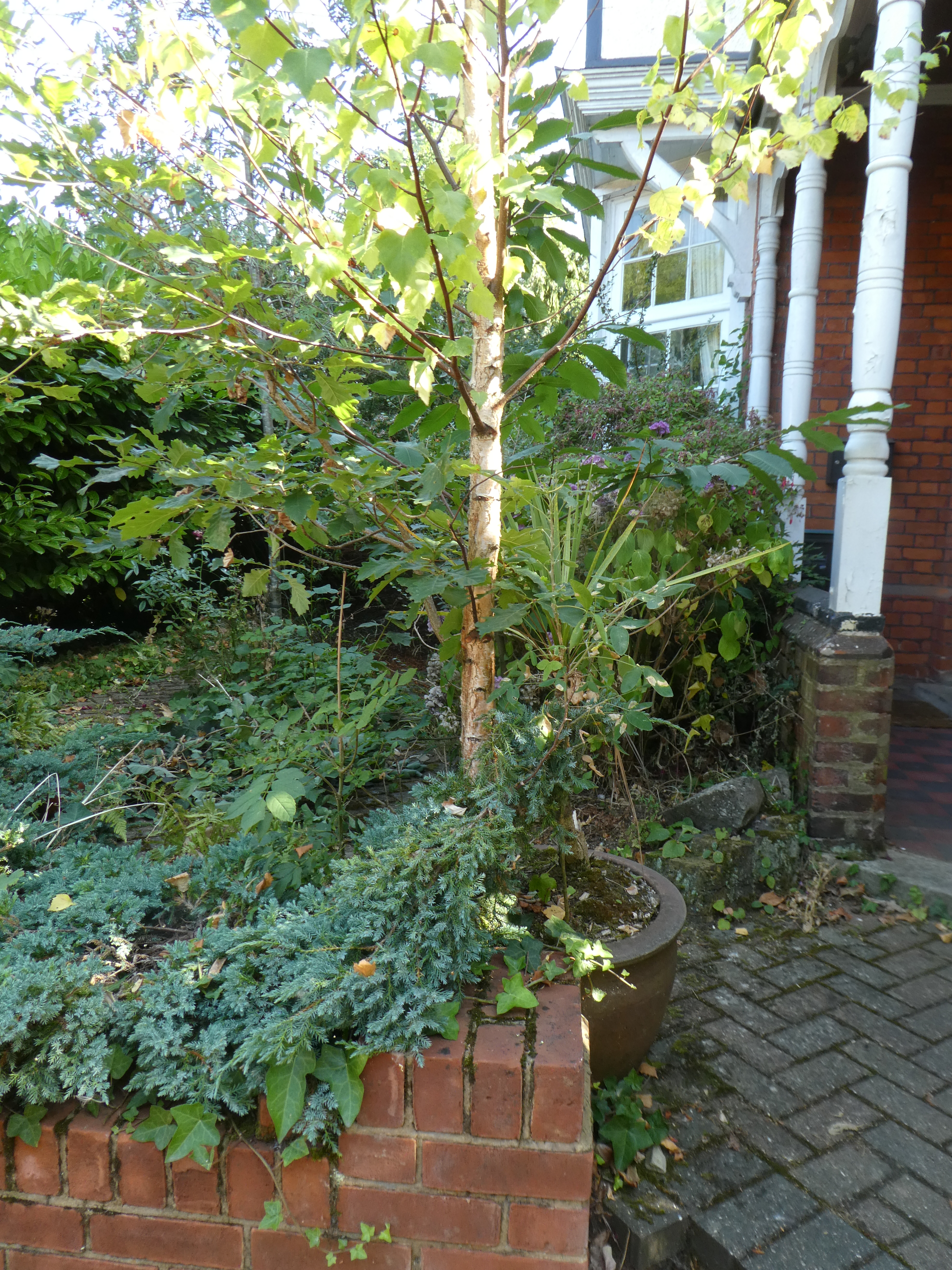
And an even more extreme example: the original yucca is hanging on grimly, despite having been joined by a birch, two laburnums (laburna?) and two oaks.

And that’s not to mention the ash trees, or the ornamental cherries. Something will have to give, but I’m not yet quite ready to give up on the idea of that wood….

The Garden-that-has-not-been-loved: hardy survivors

‘Gardening’ is not the right term for the chopping and clearing which is going on at the moment.

I find myself apologising to the garden for doing this to it during a drought, but for the first time for years I can see the bones of plants and trees as the foliage shrivels and crisps. Taking advantage of the clarity, I’m wielding secateurs and long-handled pruning shears with determination – and hardly a backward glance.

Amongst the sad, overgrown, and gasping borders, there are memories and signs of encouragement.

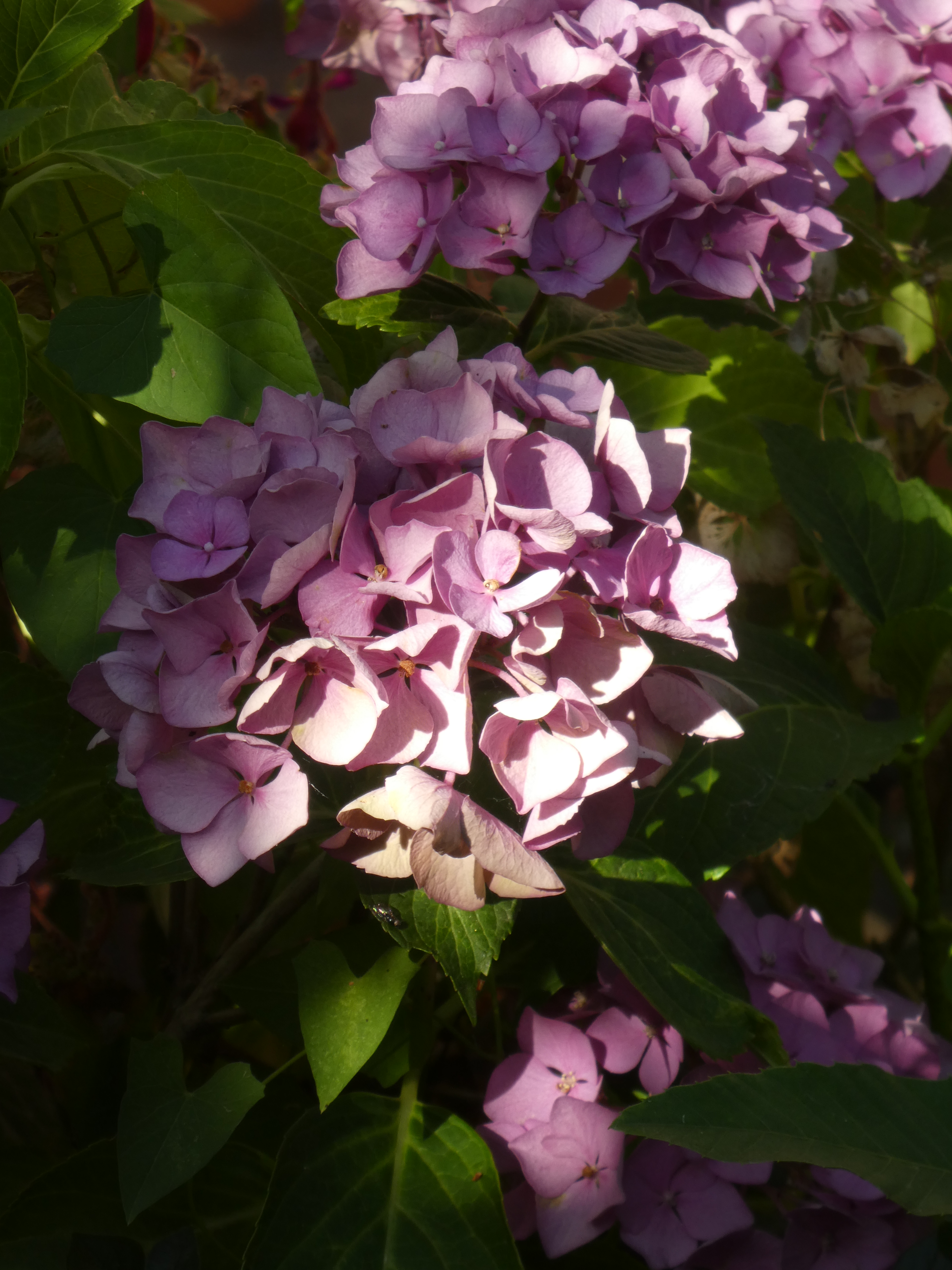
My mother had green fingers and loved everything about her gardens. Growing up in Cornwall, there were hydrangeas everywhere. I’ve never managed to produce the vibrant blues we so often saw, but the traditional pink form reminds me of her

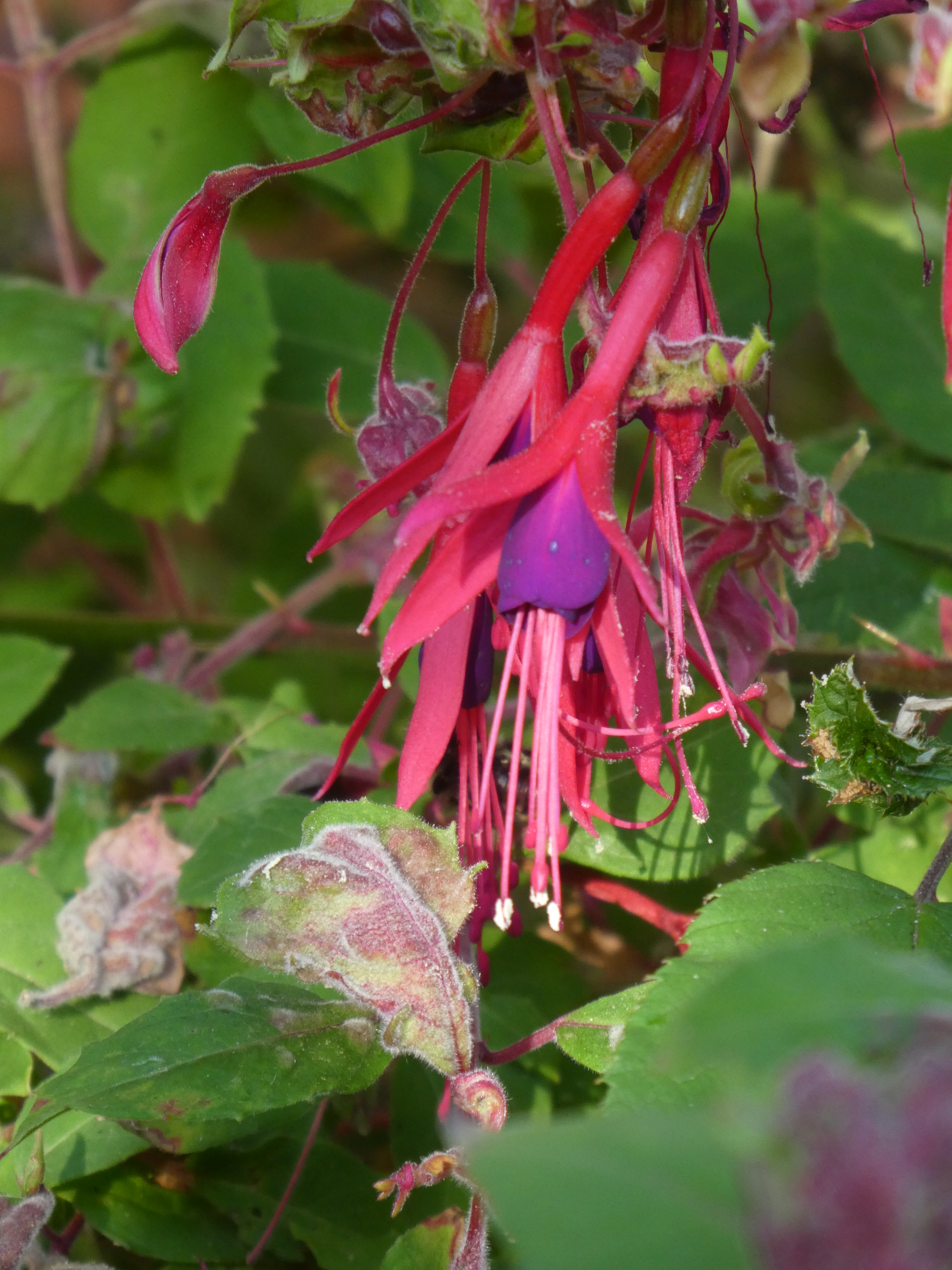
As do fuchsias – we had all kinds of fuchsias in pots and planted in the garden. I think this is probably Tom Thumb.

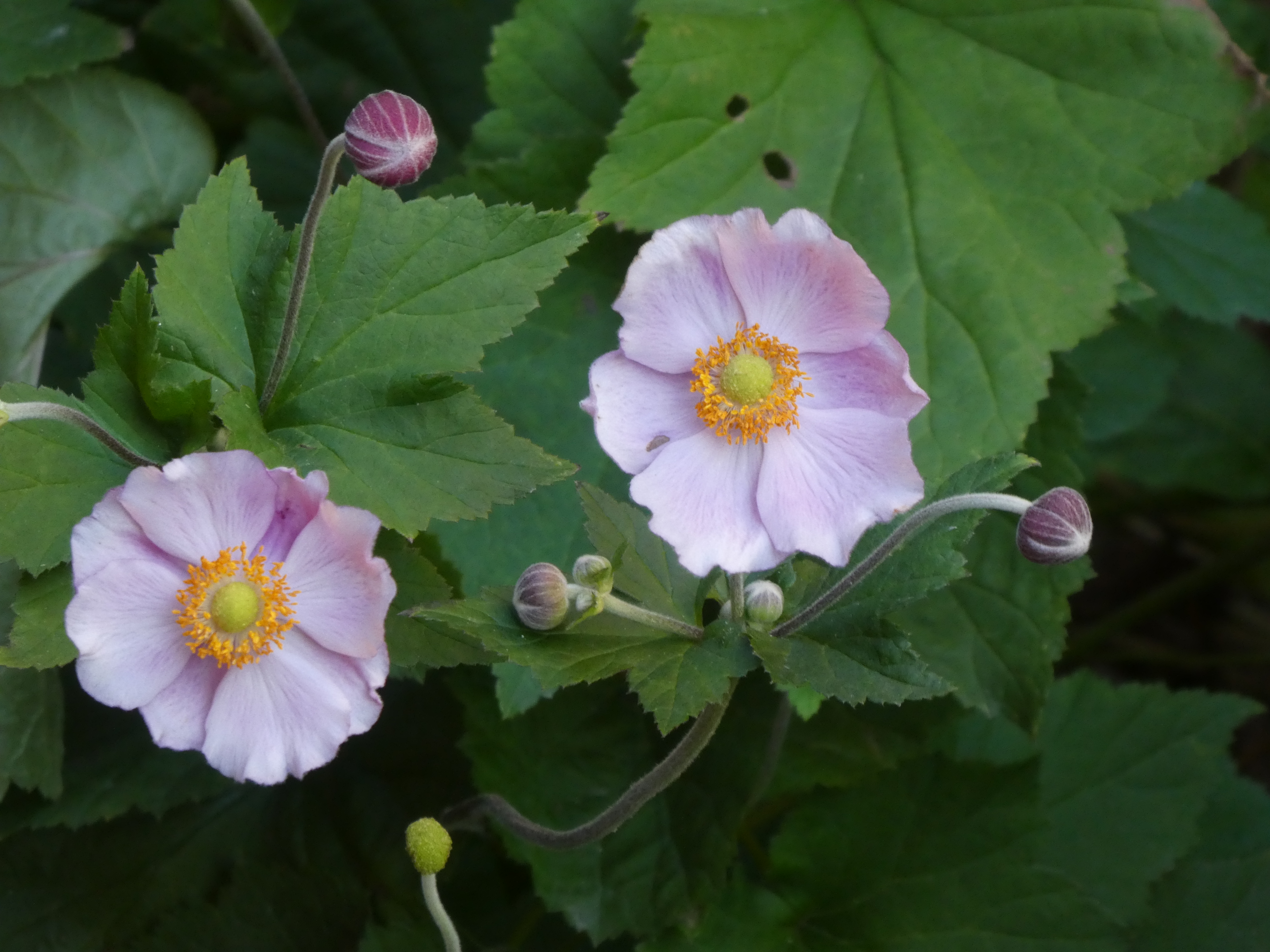
And for a flower which has always survived whatever has been thrown at it, in every home we have had, there is nothing more encouraging than the profusion of Japanese anemones.

Watering is helping the pot-bound. More to do for those with their dusty feet in the ground. Time to think about mulch….

The Garden-that-has-not-been-loved: a diary

7 August 2022

Not much is thriving in the Garden-that-has-not-been-loved: bindweed, brambles, honeysuckle with particularly small flowers and little scent. The drought has not helped – the grass (which is not a lawn) crumbles when you walk on it and the beautiful magnolia stellata which has graced every spring we’ve been here looks as if it has really had enough this time.

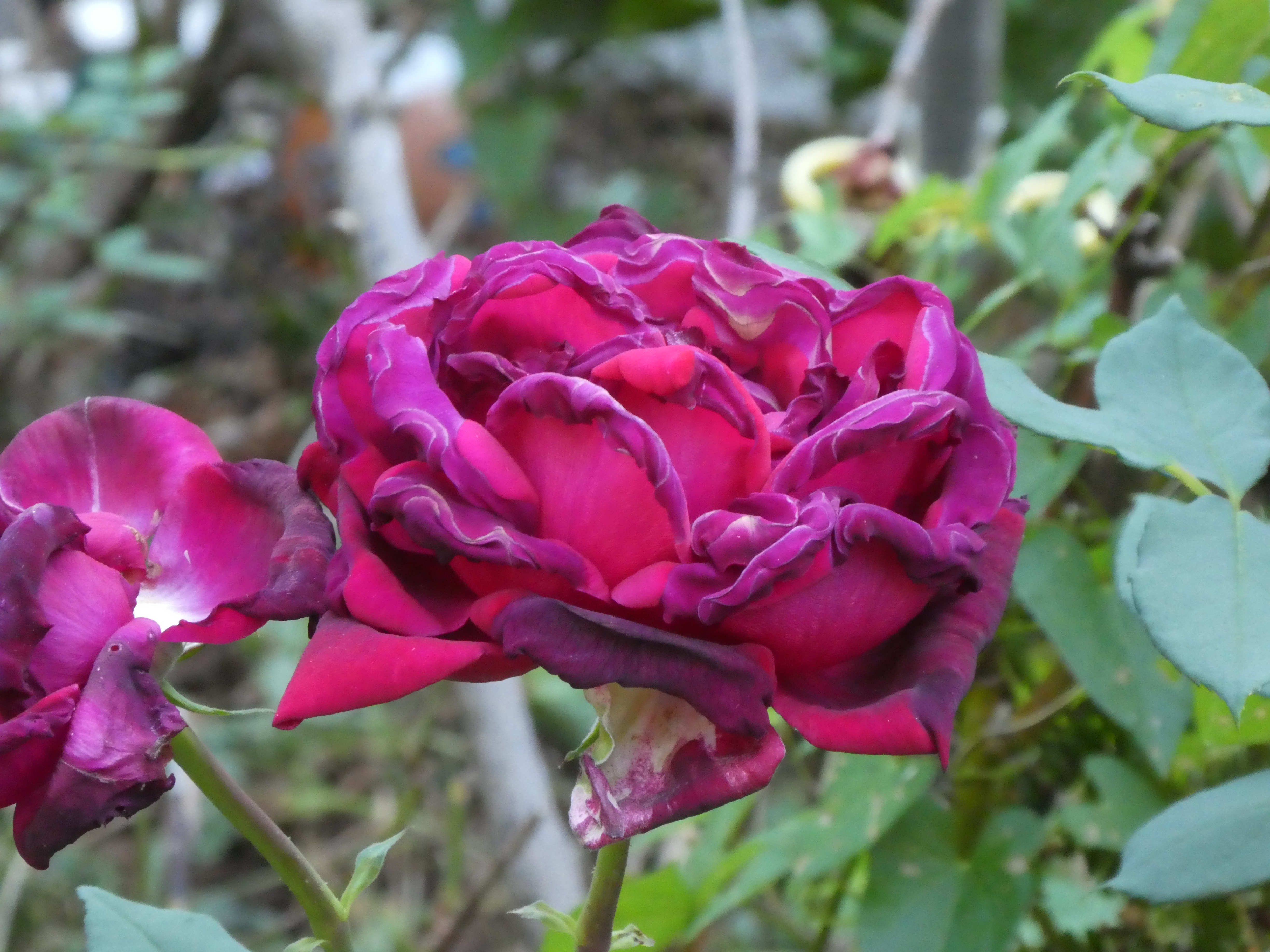
The roses, however, are doing their best to hold on. A little battered and stressed, but still there.

This is my absolute favourite, velvety red and with a glorious scent.

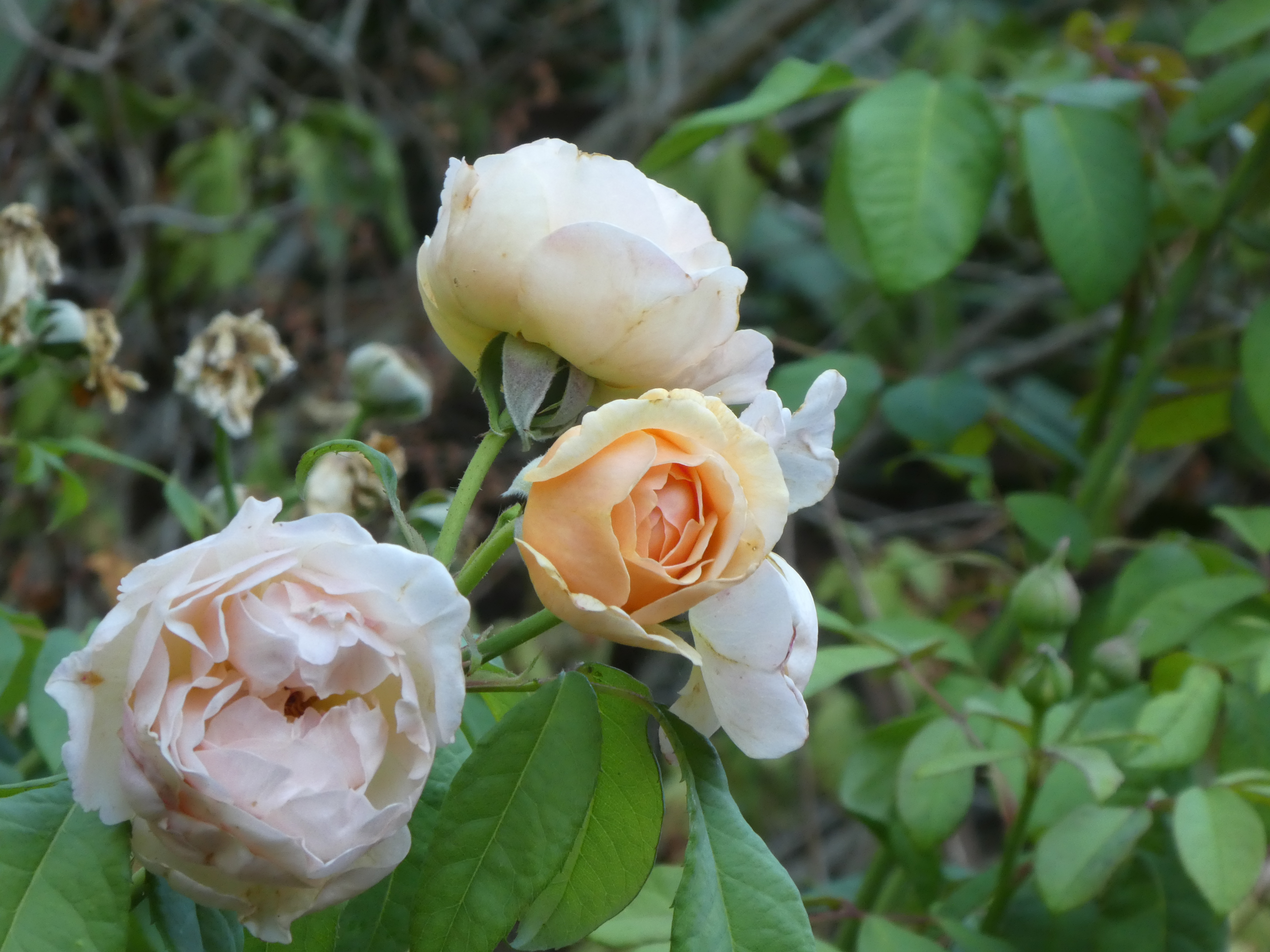
These buds start off apricot and fade away to cream.

And there is hope for a productive garden. There are apples on the apple tree, and the raspberry canes are so well established that they are pushing through into the lawn. Strawberry plants are growing on, to be planted out later, and another apple, a plum and a pear are settling into their vast pots and, so far, have had just enough water to survive. If the gooseberry, redcurrants and rhubarb survive transplantation there are the bones of a proper fruit plot.

For now – it’s back to the bindweed.