The Garden-that-was-not cared-for: a new hedge

At the back of the garden is a railway embankment. The boundary is marked by a rusty metal fence which is not a thing of beauty. There is a small slip of ground at the base of the fence, then a concrete path, and then a very dry border. The tall trees on the embankment are wonderful – and one of the things that drew us to the house – but make it a challenge to grow anything of great interest in this space.

I decided to try a native hedge along the fence line. Roughly 50 feet long and around 15 inches wide, the strip is challenging to plant. But, on the plus side, there is a rich depth of leaf mould.

A combination of squirrel activity and seeds dropped from the embankment means that we always have a good number of seedlings in the garden, so the new hedge will have several small home grown ash trees, an oak and a yew, as well as the bare root beech, hazel, hornbeam, rosa rugosa and blackthorn which were ordered very late in the day and arrived just in time to have a chance to grow.

Almost all the new plants have taken and are leafing up well. The exceptions are the two blackthorns – but I’m not giving up on them yet and hope that there is still time for them to thrive. If they don’t, they’ll be replaced in the autumn.

This is an area where the green alkanet will be allowed to grow, as will bramble and the ivy which has taken hold at one end of the fence.

The aim is to develop a dense hedge of native trees which will be kept trimmed to a reasonable height both to block out the ugly fence and to provide a place for small birds and mammals to nest.
The Garden-that-was-not-cared-for – is back!

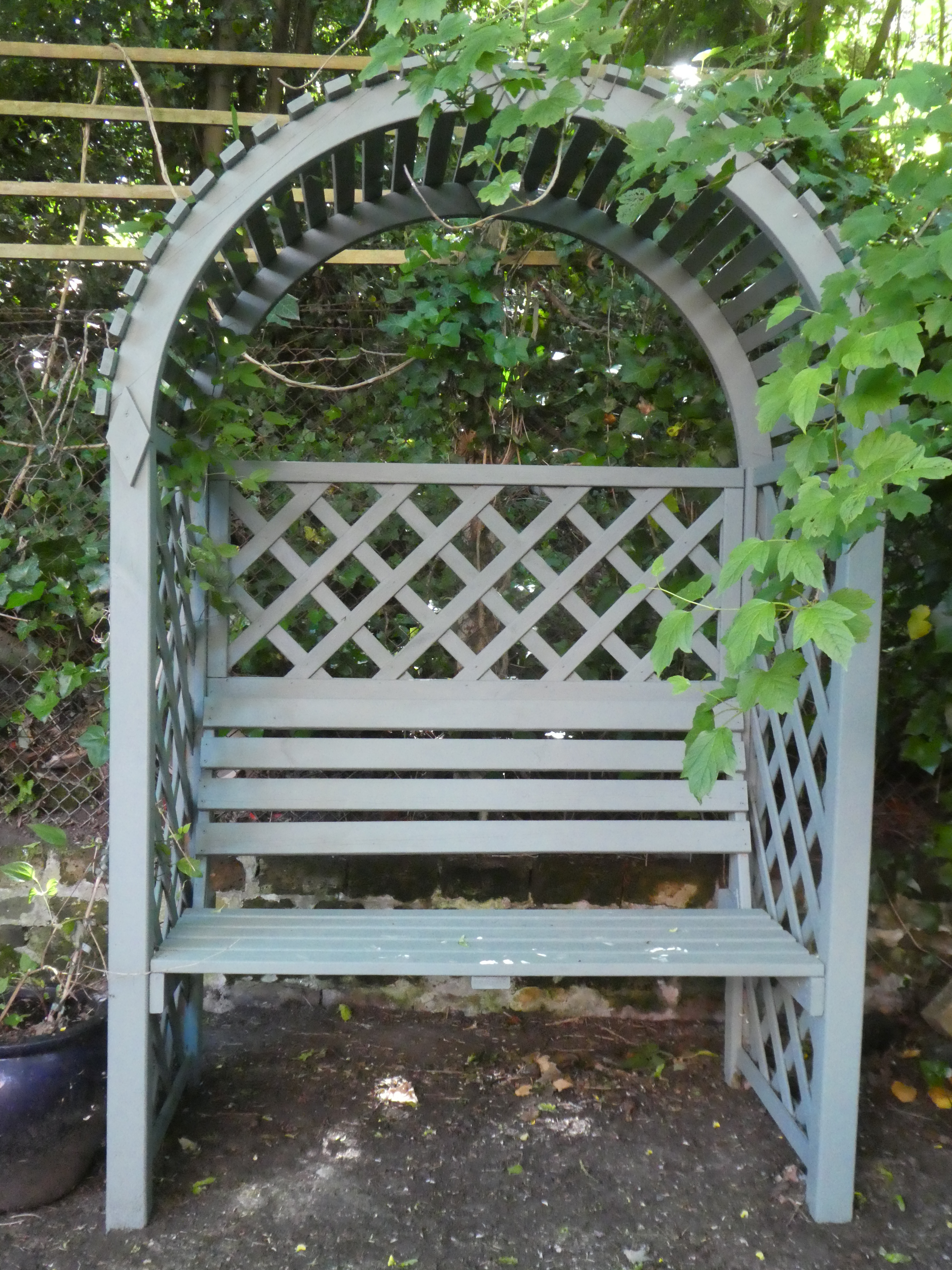
1st June 2023 : time for an update. We’ve been back in London for 8 months now. I’ve been unexpectedly busy for all that time, but have nevertheless been able to make a good start on the recovery of the garden. David has been helping with resurrecting non-flowering garden elements, such as this seat, tucked away in a shady corner.

We lost a lot of plants as a result of a strange, unpredictable winter that seemed to go on for ever: a rhododendron that was a gift from much-loved family members and all the yuccas. Then we jumped straight into full-blown spring and now seem to have moved overnight to summer. The last few weeks have been extremely dry and so many things flowered at once that it’s difficult to know what will be left for later in the year.

There are many more plants in pots than usual: some here already, some brought back from Oxford and others the result of starting to use the garden vouchers given as a leaving gift from my last role. Watering is now a daily meditation.

A border is being reworked, and I have planted a hedge at the back of the garden to grow up in front of the metal fence which separates the garden from the embankment behind. There are the beginnings of a fruit and vegetable patch, and fruit trees in pots. For the first time I have taken a deep breath and dug out large, healthy plants which did not add to the joy of the garden and which were smothering things I wanted to have.

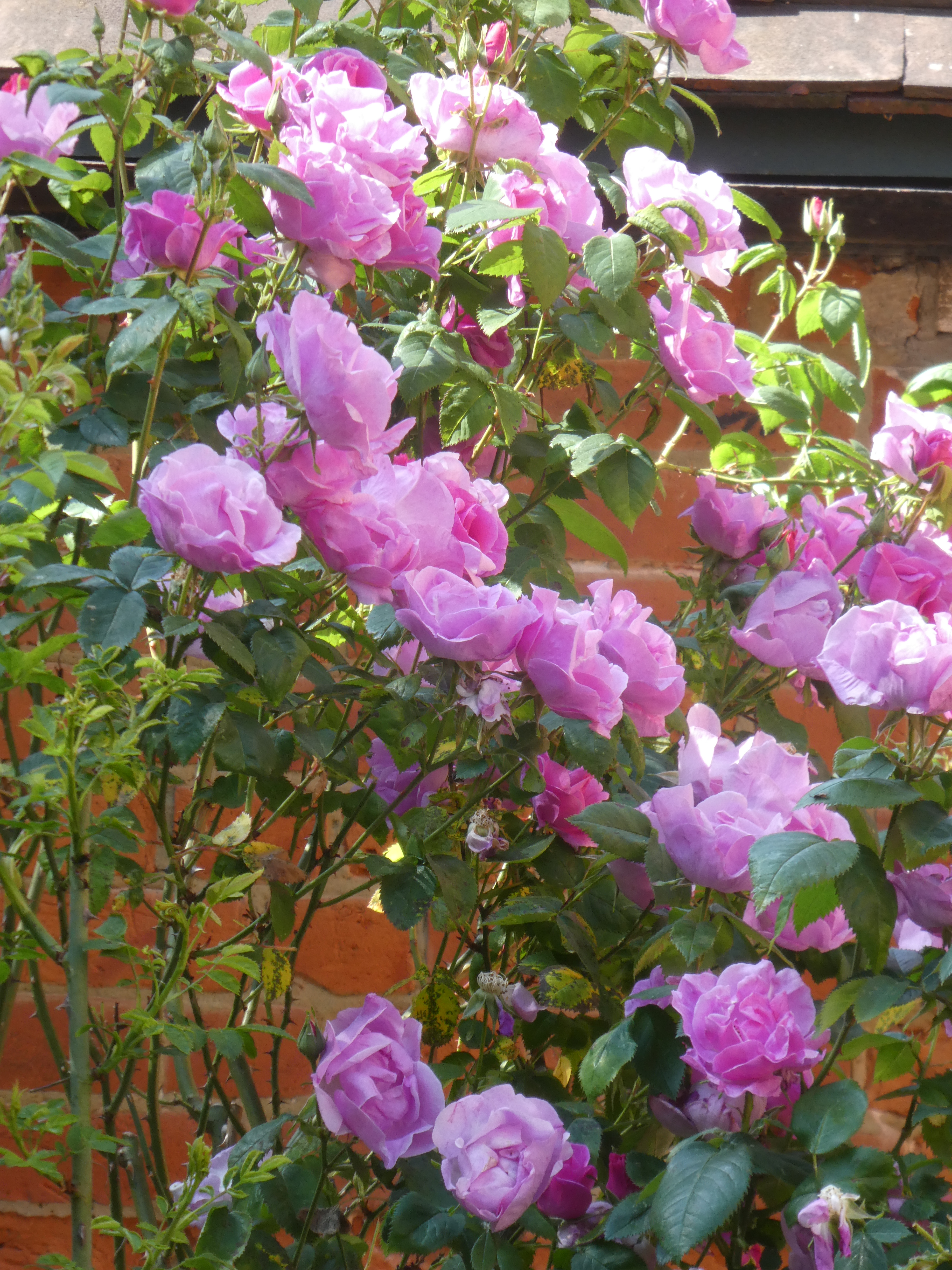
The benefits of the hard pruning of the old roses last year are coming through – although the huge rose on the patio is just throwing out soft foliage and not yet setting flower buds.

Tree surgery is booked for after the nesting season to give a little more light and space.

And we are enjoying eating at the table on the patio, watching blue tits and long-tailed tits, robins and blackbirds getting more and more confident in our presence. The squirrels have long since given up being anxious about us, and are eating the peanuts almost as fast as I can fill the feeder.

This month I am going to use a revived blog to look at a section of the garden each day, focussing on wildlife elements for #30DaysWild.

Tomorrow: the new hedge.