30 Days Wild in the suburbs: Day 2

Day 2. Another chilly day, but dry. The pavements and drains were covered with bits and pieces brought down by the wind and rain of the past 48 hours. So I decided that today’s task would be to see what I could find, and what it told me about the trees in the area – in other words, another day of walking along with my eyes on the ground. I will be looking up sometimes during the 30 days, honestly. Not least because the dog’s patience will soon begin to wear a bit thin.

So I gathered examples of leaves and seeds/cones. And when I got home, I made a nature table, in honour of all those wonderful school nature walks as a child in Cornwall. (Most of them were wonderful – there was the time I was the victim of a seagull with a particularly explosive digestive system, but I try not to dwell on that).
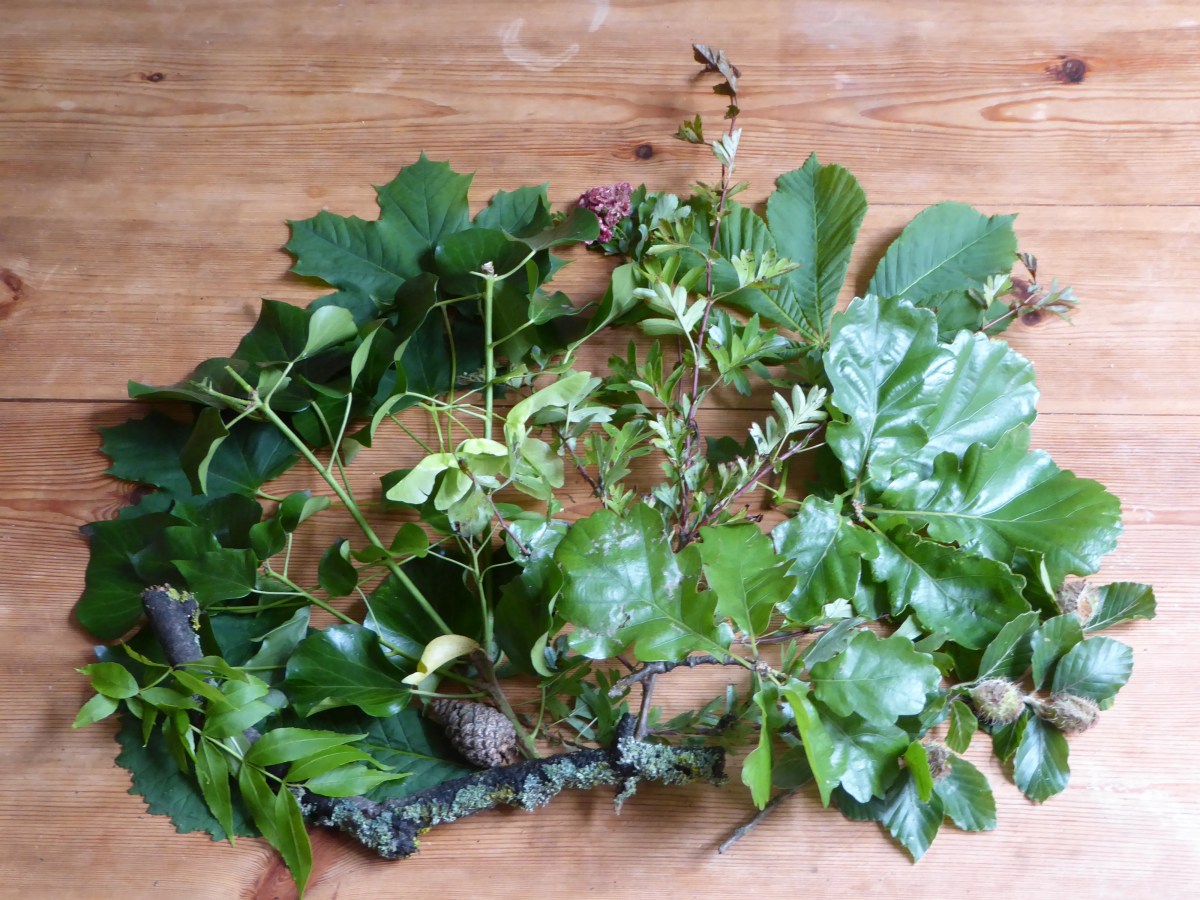
P1030460.JPG

I was rather proud of it and quite impressed by the number of trees represented.

Ash: great climbing trees, with good footholds, and those tight black, pointy buds

Beech: such a fast grower, here with mast still attached

Cherry: ornamental

Hawthorn/May: with just a tiny bunch of torn flowers

Horse chestnut: healthy leaves, but so many trees will have the weeping canker later in the year

Ivy: taking advantage of just about every other type of tree to climb and scramble, until its weight eventually brings down the host

Oak: fresh and green – I really should pull them up when squirrel-cached acorns germinate in my garden, but can never quite bring myself to do so

Sycamore: ubiquitous and  one of the few seedlings to be removed without compunction.

Generally speaking, the yews, pines and cedar seemed much less likely to have had twigs ripped off by the wind and rain.

P1030470.JPG

I found one little (Scots pine?)  cone on my first walk and some seeds, plus a piece of twig with really beautiful lichens, which are very common here. And more cones from a second walk – one from a Cedar of Lebanon, I think (warning: all items identified to the best of my ability, but I readily admit to being out of practice, so may be wrong).

P1030475.JPG


All in all, a very good Day 2. But is it too much to hope that it might get a little warmer by the end of the 30 Days?

PS

Of course, following yesterday’s complete absence of common snails, they were everywhere today.


30 Days Wild in the suburbs: Day 1

It is 1st June. The first day of meteorological summer. And it is raining. Not as hard as on 31st May. But quite hard.

So for my first of 30 Days Wild I am going to look at snails. Big snails munching my plants. Small snails crawling out of tiny holes in walls.

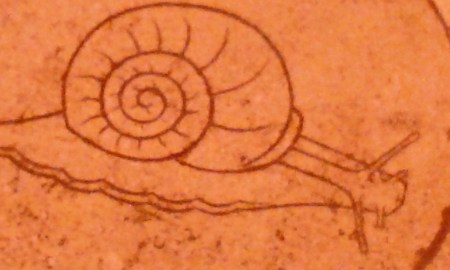
I’m going to cheat a bit (of course) and drop in other snails from elsewhere, such as this lovely example,  found in Rome last year:

20150409_163339 (2)

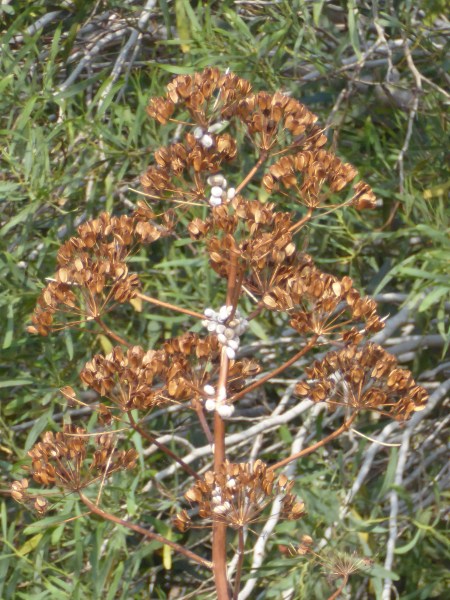
Snails are very much on my mind, as we have just come back from a week in Cyprus where we found thousands and thousands of white snails gathered in groups at ancient sites in high temperatures. They gathered ornamentally on plants:

P1030227

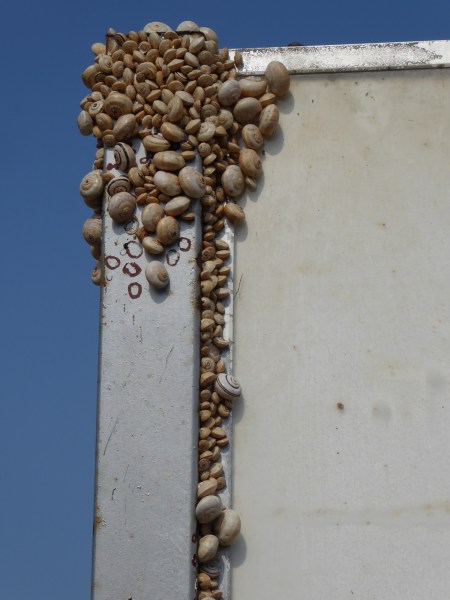
They even gathered in swags on signs:

P1030231

So I’m going to be looking for their fellows, and equivalent gatherings in my corner of the suburbs of south east London (tbc).

Which has proved very intriguing! Normally there is no shortage of large, hungry, plant eating snails underfoot, in watering cans, and generally present in my garden. Today: none.

So I resorted to walking around the neighbourhood, eyes scanning the walls and pavements. And eventually found more than the occasional individual in the spot where I should have started my search: the wall by the church where I’ve seen groups before.

(Incidentally, I have also discovered that my trusty Lumix, so wonderful for architectural details and pine cones at the top of tall trees, struggles with small molluscs which are right at my feet).

No big clusters, and no large individuals, but a variety of surprisingly bright colours. And they were all moving around. Whoever coined the phrase ‘snail’s pace’ had obviously not made any allowance for the relationship between size and speed – these little guys were really racing along!

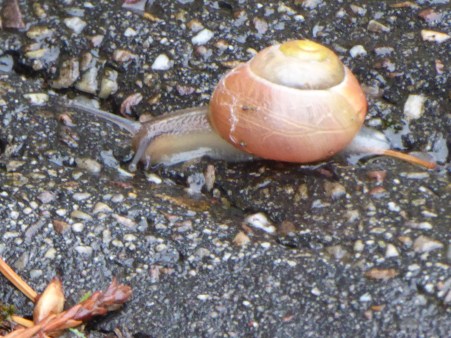
An acid drop yellow seems to be the most common colour – although that might be an illusion, because they are simply so much the easiest to see:

P1030452.JPG

Next were those that looked like little stripy mints:

P1030459.JPG

And there were also some caramel coloured individuals:

P1030451

(I’m conscious here that I have described all of these tiny snails in terms of sweets – I do not recommend that anyone tries eating them!)

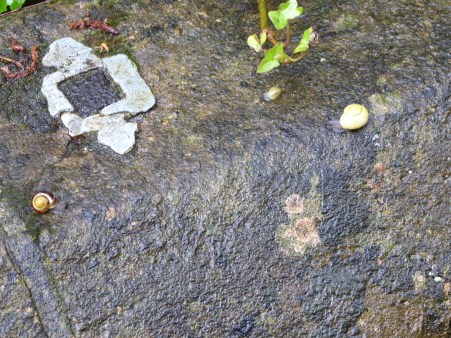
And to give some context – these really are small:

P1030457.JPG

So: suburban snails in England come in all kinds of really attractive colours; they move at some speed; the attrition rate is very high (tiny scrunched shells everywhere) and the little ones are much easier to find when it is very wet than those that are normally only too visible as they eat our prize vegetables.

Now off to think about Day 2!

1 June 2016